



Mr Marc B. Guerin
Consultant Ophthalmic Surgeon
MB BCh BAO MD MRCOphth FRCSI (Ophth)

If your cornea is damaged, a cornea eye specialist may recommend corneal grafting to restore your vision and eye health. The cornea is essentially the “window” of your eye, the clear membrane used to focus light entering the eye. If it is scarred, swollen, or misshapen, your vision can become blurry or cause pain in your eye.
At Eye Clinic Dublin Mr. Marc Guerin provides subspecialist corneal care at the Mater Private Dublin. As a cornea specialist ophthalmologist, he provides professional cornea eye operation solutions and advanced corneal treatment. He has performed over 15000 procedures at the Mater Private Dublin, including corneal transplantation surgeries. All patient journeys are personally managed by Mr. Marc Guerin, including individualised planning after an initial consultation.
The cornea helps you see by focusing incoming light. It consists of multiple layers of cells, all of which should be clear and smooth to promote healthy vision. A complete eye transplant is not yet possible, but a corneal transplantation (keratoplasty) is possible to treat several issues and restore vision.
For corneas which have been damaged, are cloudy, or subject to diseases or conditions such as Fuchs’ dystrophy, keratoconus, endothelial dystrophy, ulcers, or corneal edema, a corneal transplantation can restore vision by grafting healthy tissue from a donor. All donor tissue is carefully selected so no tissue is taken from donors who had poor eye conditions.
If your cornea is damaged, swollen, scarred, or misshapen and repair is not possible, your cornea eye doctor may recommend one of several corneal transplantation procedures, depending on the extent of impairment.
A cornea eye doctor can address several conditions with corneal transplantation. Some of the
most common conditions that can be treated include:
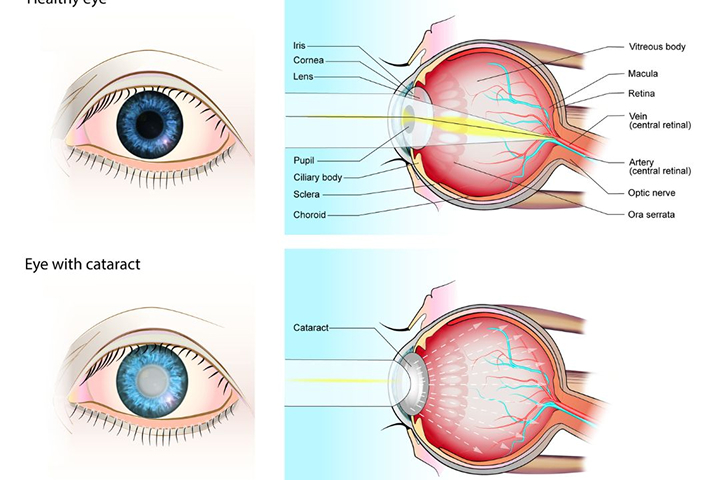
Fuchs’ corneal disease occurs when corneal inner layer (endothelium) cells gradually die. Fuchs’ eye leads to endothelial corneal issues that occur in two stages. It is most common for people in their 30s and 40s (stage 1), but it isn’t until the 50s or later (stage 2) that patients begin to experience vision problems.
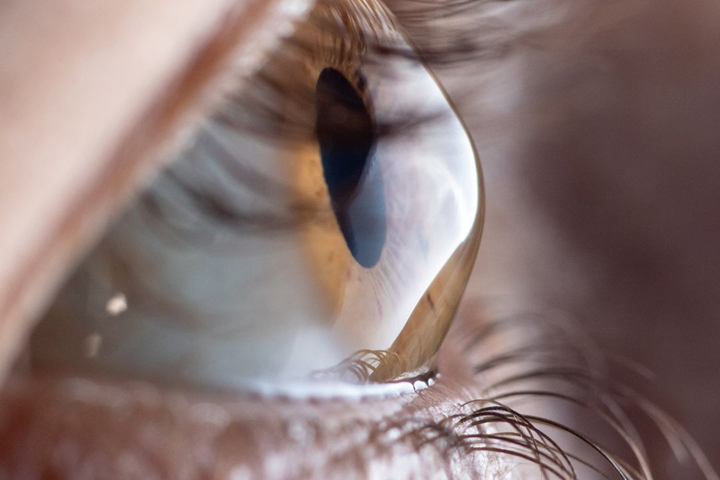
Keratoconus is a condition in which patients experience a gradual thinning and bulging of the cornea. It can lead to blurry vision, itchy eyes, or swelling. Doctors are still unsure as to what specifically causes keratoconus, but keratoconus eye treatment can effectively restore vision.
Corneal dystrophy (which includes Fuchs’ corneal disease) refers to several types of diseases whereby the cornea accumulates material and becomes cloudy or irregular in shape. These diseases tend to be hereditary, but in many cases, corneal dystrophy treatment can restore eye health.
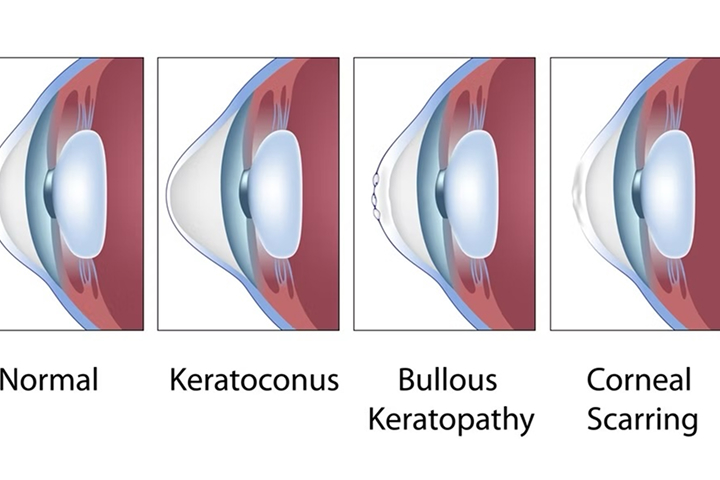
Corneal scarring and damage can occur from an injury or from infections. They may also happen from the healing process from an injury or infection, when the healing leaves permanent scar tissue that affects your vision. Corneal transplantation may be recommended to resolve these issues.
There are several types of corneal transplant surgery, so the specific procedure that one patient may require could differ significantly from yours. It depends on which layer of the cornea is damaged. Mr. Marc Guerin performs the following procedures:
A Penetrating Keratoplasty (PK eye procedure) involves the full replacement of the entire cornea’s thickness with healthy donor tissue. If the front and inner layers of the cornea are all damaged, e.g. from deep scarring or advanced disease, PK may be necessary.
Recovery time can therefore take much longer, ranging from several months to a full year for full visual stability. Associated risks are also slightly higher for PK.
If the front and/or inner layer(s) of the cornea are damaged, a partial-thickness transplant may be more suitable than a PK. These procedures preserve healthy tissue whilst replacing damaged layers with donor tissue:
DSAEK (Descemet’s Stripping Endothelial Keratoplasty) replaces the inner endothelial layer and is commonly performed to treat corneal swelling and Fuchs’ dystrophy. It involves a smaller incision than what is necessary for PK. Recovery time tends to be faster than PK as well.
DMEK (Descemet Membrane Endothelial Keratoplasty) replaces only the thinnest inner layer of the cornea and is commonly performed to treat corneal edema and Fuchs’ dystrophy. A DMEK graft tends to provide the best visual quality and fastest recovery times.
DALK (Deep Anterior Lamellar Keratoplasty) replaces the front corneal layers whilst preserving the patient’s endothelium and is most commonly performed to treat keratoconus and corneal bulging. It has a significantly lower risk of rejection than PK and has recovery times ranging from several months to a year for full visual stability.
Following an initial consultation with your cornea eye specialist and after deciding which procedure is recommended for you, you will be given appointments for further scans, assessments, and a general health review from your GP. Your existing medications will need to be reviewed, and you may need to pause use of blood thinners before the procedure. Do not wear eye makeup or contact lenses prior to the procedure, and arrange for transport to and from the hospital.
The procedure is performed under local anaesthesia with sedation, so you will not feel anything, and you will be unable to see, even with your eyes kept open. Depending on the type of procedure and complexity, the total time in theatre can range from around 30-90 minutes. A guard will usually be placed over your eye and must be kept in place during the initial recovery period.
Corneal transplantations are done as outpatient procedures, so in most cases you can go home on the same day.
Immediately after the procedure, you will be consulted by the surgeon and given prescription eye drops and directions on how to use them. These will typically be needed for several months as you recover. You will also be given follow-up appointments to gauge the progress of your recovery.
If you were given an eye shield, keep it in place at night and refrain from rubbing your eyes, swimming, or engaging in strenuous physical activities like heavy lifting for a few weeks. You may need to lie down on your back more than usual during the initial recovery.
Report any significant issues, like increasing pain, eye redness, or light sensitivity to your doctor immediately.
Expected recovery times vary, but typically you can expect a full visual recovery as follows:
All surgeries carry risks. These will be discussed with you fully and transparently at an initial
consultation with your cornea specialist ophthalmologist. Risks and common side effects
associated with corneal transplantation may include:
(temporary, most common in early recovery)
Because corneal transplantation requires healthy tissue from a deceased donor, there is always a risk of graft rejection, in which the immune system attacks the graft. Around 10-20% of PK procedures have this risk (much lower for DMEK/DALK). Early detection can reverse it, so pay close attention to the following signs: increasing pain, light sensitivity, redness, and/or worsening visio
Eye infections can occur from a corneal transplantation, either inside or around the eye. With modern techniques and equipment, infection risks are minimal, but pay close attention to symptoms of infection and seek assistance immediately.
Your prescribed anti-inflammatory and antibiotic eye drops can sometimes result in increased eye pressure (glaucoma). If you suspect you have glaucoma, prompt treatment can manage the symptoms.
When your cornea is grafted with tissue from a donor, your new cornea could become cloudy over time, which is often a sign of graft failure. Speak with your ophthalmologist as soon as possible. Repeat surgery may be required to treat it.
Your newly grafted cornea may have an irregular curvature (astigmatism). You may need to wear glasses or contact lenses to correct astigmatism, or seek laser corrective surgery to treat it.
During PK and DALK procedures, cell tissue is grafted with sutures. These sutures may loosen, break, or simply cause irritation. Speak with your ophthalmologist at your earliest convenience for treatment.
Corneal transplantation is used to treat significant corneal disease and damage when other treatments are not sufficient.
If your vision has become blurred or progressively worse, a specialist consultation at Eye Clinic Dublin will determine whether corneal treatment or surgery is right for you.
Recovery times for corneal transplantation vary depending on the patient and the type of procedure, but generally most patients see full visual stability after a few weeks to a few months (DSAEK, DMEK) or a few months to a year (PK, DALK). Patients can return home on the same day and will start to see somewhat normally after a few weeks’ recovery.
You may need to continue wearing glasses after a corneal transplantation, especially after a full-graft (PK) procedure. While your cornea will be clearer after surgery, you may still suffer from long-sightedness, short-sightedness, or astigmatism.
Yes. Donor tissue used in corneal transplantation is thoroughly screened to ensure that the deceased donor did not suffer from infections or severe eye health problems. This does not ensure that every graft will be successful, however.
Corneal transplantation generally takes between 30-90 minutes, depending on the complexity and type of procedure. Patients are generally seen on an outpatient basis, so you can usually return home on the same day.
Yes, provided that corneal disease is not too advanced or damage is too severe, alternatives may be more suitable for your specific circumstances. One common alternative to corneal transplantation for patients with a bulging, thinning cornea is keratoconus and corneal cross-linking.
You can only drive when your cornea eye ophthalmologist says it is safe to do so. For most patients, this is usually a few weeks into initial recovery following the procedure, but make sure you meet the safe legal minimum to operate a motor vehicle in Ireland and follow the directions of your doctor.
The cost of a corneal transplant in Ireland is highly variable, since there are many procedure types and it is dependent upon access to healthy cell tissue from donors. Consult with our team at Eye Clinic Dublin for a transparent cost breakdown for corneal transplantation for your specific circumstances.