


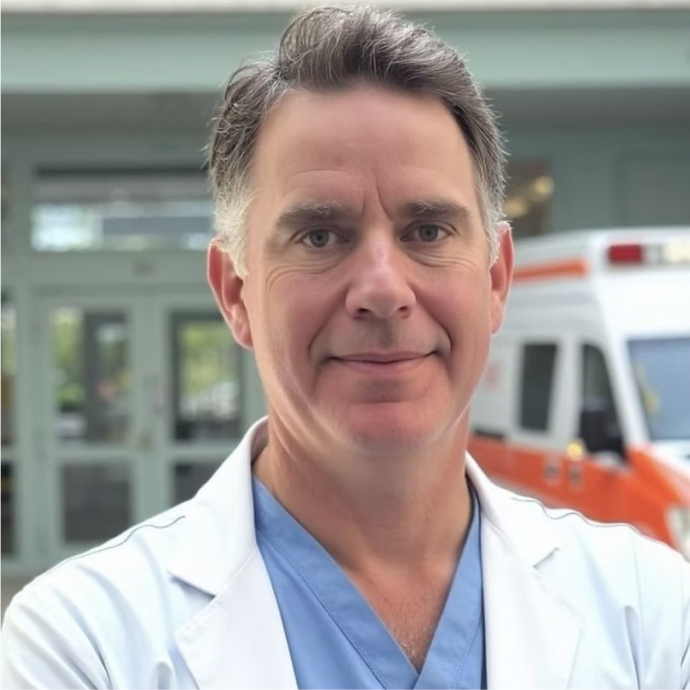
Mr Marc B. Guerin
Consultant Ophthalmic Surgeon
MB BCh BAO MD MRCOphth FRCSI (Ophth)
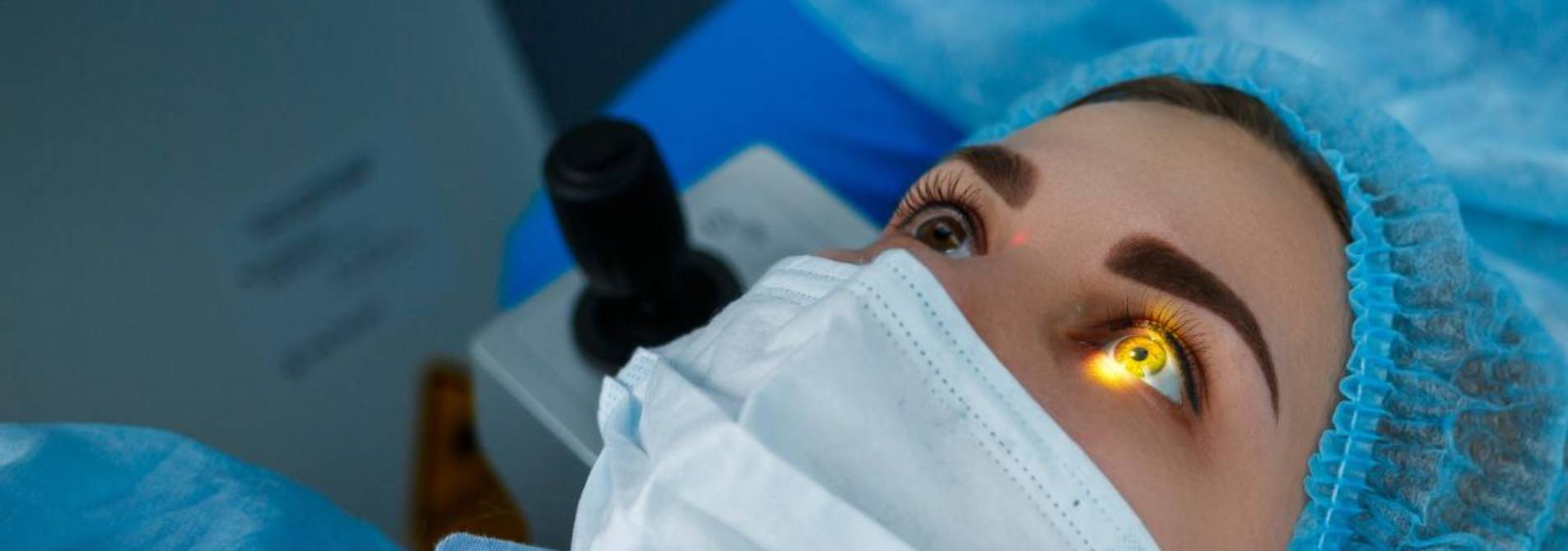
If you are near-sighted or short-sighted (myopia), far-sighted (hyperopia), or have astigmatism, laser eye surgery may be the perfect path to spectacle independence for you. Our laser eye treatment in Dublin from a specialist consultant ophthalmologist can remove your dependence on glasses or contact lenses and restore clear vision.
IN the Mater Private Dublin, we offer LASIK and PRK procedures, two of the most common types of laser eye surgery. We are Ireland’s largest and most experienced private eye clinics. In fact the first ever Lasik eye surgery was performed in the Mater private hospital in 1990, and over 70000 laser eye surgeries have been performed in the Mater private hospital since then. With over 5,000 procedures performed, our University Hospital-affiliated Consultant Ophthalmic Surgeon Mr Marc Guerin will personally manage your patient journey from initial assessment to final review.
Laser eye surgery is generally most suitable for patients who suffer from a moderate degree of refractive error, such as myopia (short-sighted), hyperopia (long-sighted), or astigmatism. We typically only recommend laser eye surgery for patients 20 or older and with no unusual vision problems, if you’ve had a stable prescription for 12+ months, are not pregnant or breastfeeding, and have a suitable corneal thickness for the recommended procedure.
If you have a stable prescription and wear glasses or contact lenses, corrective surgery can lessen or remove dependence on them, often permanently. Note that for reading glasses prescriptions (presbyopia), laser eye surgery is not recommended because these often change with age.
Moreover, certain eye conditions may cause complications for laser eye surgery, such as:
During an initial consultation with Mr Marc Guerin, your overall eye health will be considered and you will be given a clear and transparent medical opinion. Enquire with us at Eye Clinic Dublin for a consultation. Mr Guerin will accompany you on every step of your journey and you will be seen by him personally on EVERY VISIT
Eye Clinic Dublin provides the most up-to-date laser eye corrective surgery procedures from internationally trained ophthalmologist Mr Marc Guerin. Our procedures include:
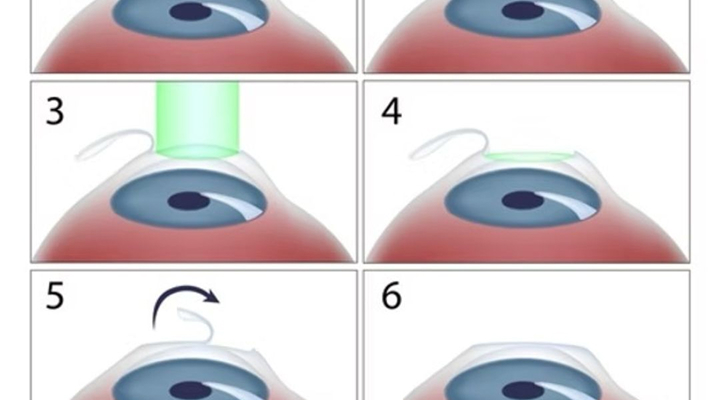
Reshapes the cornea to correct vision. A highly precise femtosecond laser is used to create a thin corneal flap. A second excimer laser then reshapes the corneal tissue underneath. The corneal flap is replaced and heals over time.

A transepithelial (no-touch) procedure that reshapes the cornea without the need to create a flap. A laser gently removes the surface corneal layer (epithelium), then reshapes the underlying cornea. The epithelium then regrows after a few days.
for both LASIK and PRK, several anaesthetic drops are applied to your eyes to minimise any discomfort.
for both LASIK and PRK, an eyelid holder is placed in your eye to gently keep it open. In LASIK, a laser is used to create a flap in the epithelium (outer layer of the cornea); in PRK, a gentle brush is used to remove the epithelium. An excimer laser is then used to reshape the corneal tissue and correct your vision.
apply eye drops as prescribed and directed by your doctor.
do not operate a motor vehicle for at least 24-48 hours (LASIK) or 4-7 days (PRK) post-surgery.
try to avoid rubbing your eyes; contact your doctor if you experience worsening pain.
refrain from swimming or entering hot tubs for at least 2 weeks.
At Eye Clinic Dublin and Mater Private, laser eye surgery is generally recommended for patients aged 20 or older. During adolescence, conditions such as myopia commonly change, often into adulthood. A thorough initial consultation can allow your ophthalmologist to determine the suitability of these procedures for your specific circumstances, taking into account your age and general eye health.
We generally do not recommend laser eye surgery for individuals who suffer from high refractive error or severe short-sightedness HOWEVER WE OFTEN PERFORM ICL LENS SURGERY FOR PATIENTS WHO ARE TOO SHORT SIGHTED FOR LASER EYE SURGERY. Furthermore, individuals with uncontrolled diabetes, autoimmune disorders, or those taking immunosuppressive medicine may wish to reconsider refractive surgery.
The results of laser eye surgery, when performed by a qualified ophthalmologist, may last for several years or for the rest of your life. The vast majority of patients do not need to use any prescription lenses in the first 10 years following LASIK, for example. Note that natural ageing can progress myopia and other conditions, but hardly ever to the point where they would be without corrective laser surgery.
At the Mater Mr Guerin uses the latest technology Swiss Ziemer laser to make flaps in LAsik, and an Alcon excimer laser to permanently reshape the eye’s cornea, which in turn corrects conditions such as short-sightedness, far-sightedness, and astigmatism. Depending on the type of procedure, specific methods vary.
You can normally drive safely around 24-48 hours after a LASIK procedure, and around 4-7 days following PRK surgery. You should arrange for transport from the clinic ahead of time and make plans for transport during the recovery period.
Individual results for laser eye surgery recovery vary, but laser vision correction generally has initial functional recovery times of around 1-2 days (LASIK) or 3-7 days (PRK). Some temporary side effects may occur that impair vision, such as seeing a glare or halos around lights, light sensitivity, or poor night vision, but these are typically temporary.
Laser eye surgery is not painful, but rather it can cause mild discomfort and a sensation of pressure (as if wearing tight goggles) during the procedure. Some mild discomfort is typical during the recovery period.
Yes, with laser eye surgery, astigmatism can be effectively treated. The application of excimer lasers to the cornea permanently reshapes the cornea by eliminating irregular curvature, which resolves astigmatism. Both LASIK and PRK are highly effective at treating astigmatism.
There are several potential risks to LASIK, PRK, or any other laser operation for eyes. Most are temporary, and they include dryness, sensitivity to light, seeing a glare or a halo around lights, mild to moderate discomfort (usually just for a few days), and fluctuating vision. Less commonly, risks include under- or over-correction, inflammation, infection, slow healing (more common with PRK), poor night vision, or a corneal haze (usually with PRK). Rarely, but quite seriously, side effects may include ectasia (progressive corneal weakening), permanent loss of vision (very rare), or severe infection or scarring.
The recovery period for LASIK and PRK vary depending on the individual, but generally a full recovery can be expected in a few weeks (LASIK) up to around 1-3 months (PRK). Gradual healing begins after the procedure and a functional recovery of vision is much faster, around 24-48 hours (LASIK) or 3-7 days (PRK).